
The idea of “going off the grid” or simply cutting off those monthly utility bills has been very easy to achieve. In 2025, the popularity of DIY solar kit has changed home renewable energy from a lavish service to a weekend project for the skillful homeowner. You can get the sun’s power at a very low cost by removing the high profits of regular installation companies—sometimes up to 50% of the total project cost comes from this markup. Whether you want to power a secluded cabin or an RV, or even your whole house, the first step to gaining complete energy independence is picking the right DIY solar kit.
In this article, we’ll explain what a DIY solar kit is, its benefits, what’s include, and how you can setup your own solar system easily.
Why a DIY Solar Kit is the Best Investment in 2025
The solar market has experienced a change in direction. On the one hand, the services offered by professional installers are important, but on the other hand, “soft costs” (marketing, sales commissions, and overhead) have not experienced the same decrease in price. The national average for a professional installation of 12 kW in October 2025 works out to be about $29,649 as per EnergySage. Nevertheless, if a homeowner chooses to go the DIY route with a solar kit, he/she would typically be able to buy the same top-notch parts for approximately $13,000 to $15,000, thereby reducing the cost by a considerable amount.
The Financial Advantage of Going DIY
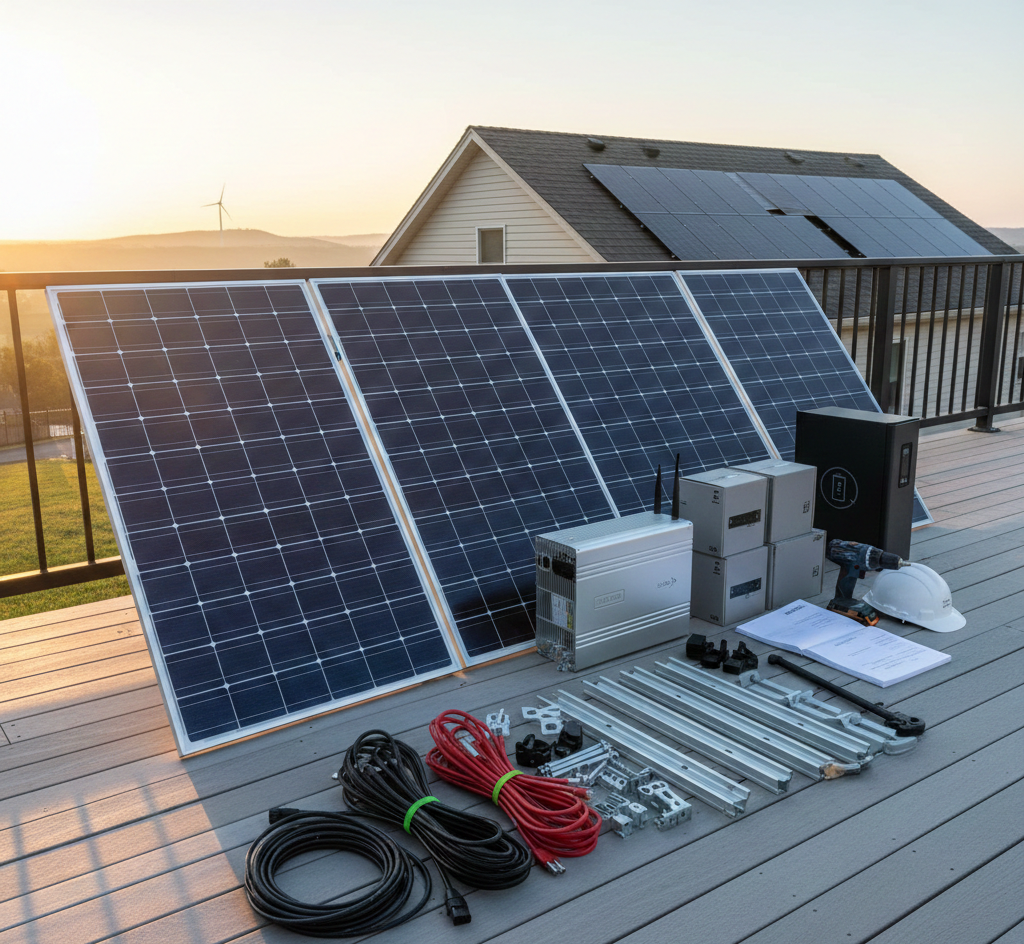
You’re not just purchasing hardware when you acquire a pre-packaged DIY solar kit; rather, you are purchasing a solar system that is designed for you. These kits are made with a consideration of compatibility for the panels, the inverters and the racking systems.
- Lower Upfront Cost: Skip the 18% sales and marketing markup which is common in the industry.
- Faster ROI: DIYers with lower initial costs typically see their system pay for itself in 4 to 6 years, as compared to 8 to 10 years for a professional installation.
- Tax Incentives: In the USA, the Federal Investment Tax Credit (ITC) enables you to deduct 30% of the cost of solar equipment from your federal taxes and yes, this also covers a DIY solar kit!
Benefits of using a DIY Solar kit
1. Cost-Effective solution
Buying a pre-assembled solar kit is cheaper than hiring professionals for a full installation. you can save money while still enjoying clean energy.
2. Eco-Friendly energy
Solar energy is renewable and reduces carbon emission making it a green alterative to fossil fuels.
3. Portable and flexible
Many solar kits are lightweight and portable, making them perfect for camping, RV trips, or powering remote cabins.
4. Emergency Backup power
DIY solar kits can serve as backup during blackouts, ensuring your lights and essential devices keep running.
5. Easy to install
Most kits are designed for beginners with plug-and-play features, so you don’t need advanced technical knowledge.
What’s included in a DIY solar kit? (Amazon)

A typical DIY solar kit includes:
- solar panels – To capture sunlight and convert it into electricity.
- charge controller – Protects batteries from overcharging.
- inverter – Converts DC power into AC for running appliances.
- Battery Pack – stores energy for nighttime or cloudy days (some kits may not include batteries)
- Cables and Connectors – for safe and easy connections.
How to setup your DIY Solar kit
1. Choose the right kit
Before purchasing, decide what you want to power. A small kit is enough for LED light’s or charging phones, while larger kits can fans, refrigerators, or even TVs.
2. Install the solar panels
Place the panels in a sunny area, preferably on a rooftop or open ground, at the right angle to get maximum sunlight.
3. Connect to charge controller
attach the solar panel wires to the charge controller to regulate the power flow.
4. Add Battery (if available)
Connect the controller to the battery for storing extra energy.
5. Connect the Inverter
Finally, connect the inverter to your battery and start powering your home appliances.
Best uses for DIY solar kits
- Camping and outdoor trips.
- Powering small homes or cabins.
- RV and Van life
- Emergency Backup power.
- Work shop and Garden sheds.
Conclusion
Going to renewable sources of energy does not necessarily need to cost a lot of money. A first-rate do-it-yourself solar kit gives you the tools, the instructions, and the financial benefits necessary for you to have a say in your energy future. The entire process of solar energy production starting with the first site evaluation up to the point when you turn the switch is now made easier than ever before.
A DIY solar kit is an easy and inexpensive method to get to know the solar energy better. If you are a plant lover, camper, or have only an interest in renewable energy, a solar kit will be your partner for money saving, lessening your impact on the environment, and power autonomy.
In case you are considering going the solar way, begin with the basics a kit that corresponds to your requirements and build upon it later as your need for power increases. it is a wonderful investment for both your money and the planet.
If you want to know about which type of solar system is better for you than you go with this blog post: Best solar panel kit for home and DIY projects.