
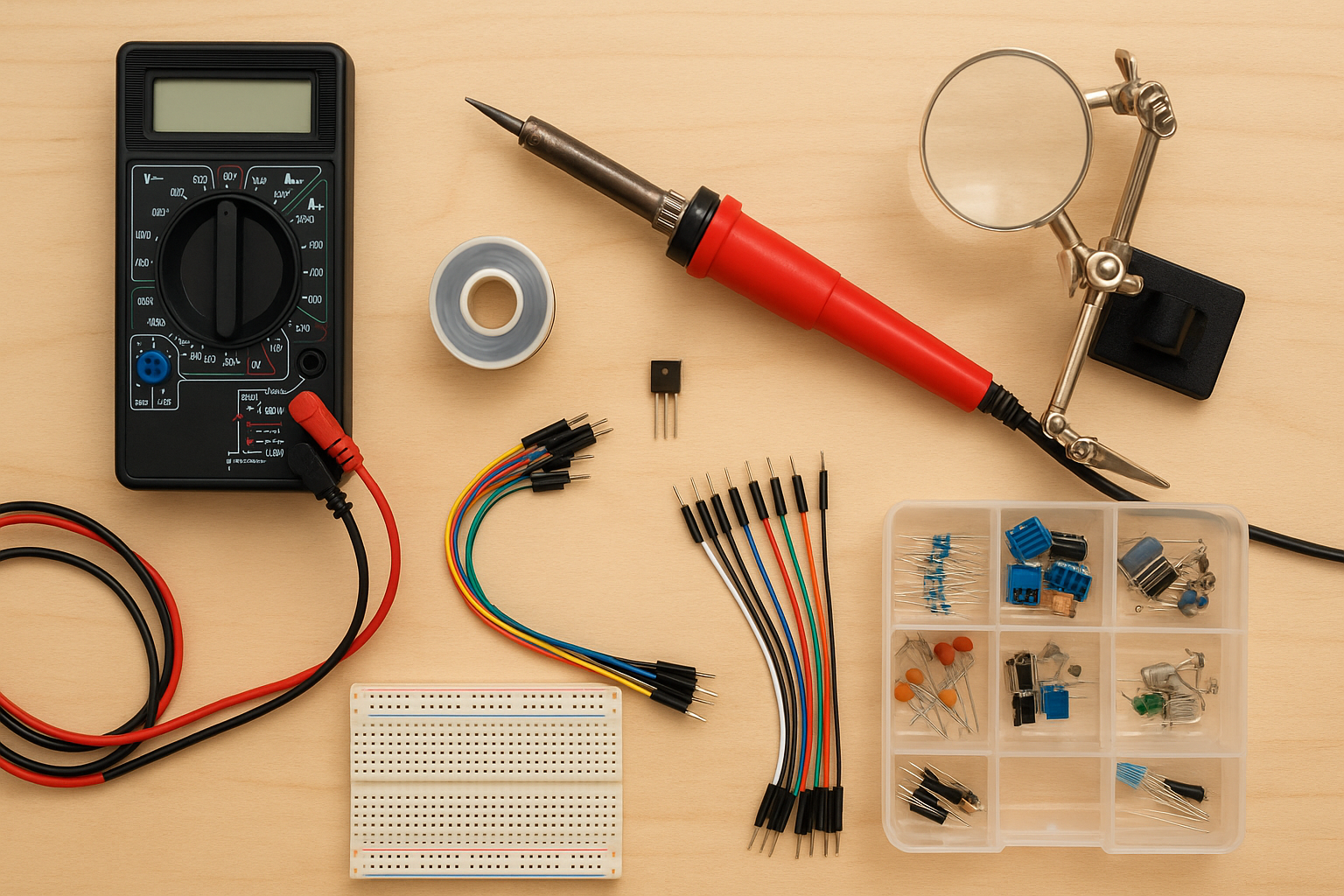
If you’re passionate about DIY Electronics Projects. having the right tools can make all the difference between a messy setup and professional build. Whether you’re assembling an Arduino projects, testing circuits, or soldering components, the right DIY electronics tools save times, improve precision, and make learning fun.
in this guide, we’ll cover essential electronics tools for beginners and hobbyists, with Amazon affiliate links to the best-rated products. we’ll also link to helpful tutorials from our site so you can start next project confidently
1. Soldering kit – The Heart of DIY Electronics
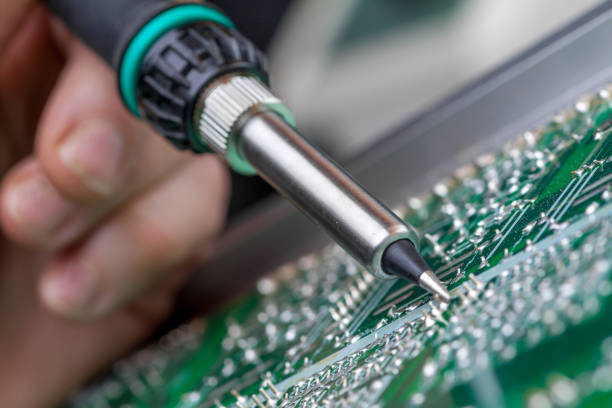
Every electronics hobbyist needs a soldering kit. it allows you to join components securely, repair circuits, and make durable connections.
recommended tool: Best Soldering Kit for Beginners on Amazon(Affiliate Link)
Features to look for :
- Adjustable temperature control
- Fine soldering tip or precision
- Heat-resistant handle
- Stand and cleaning sponge
check our detailed guide– Best soldering kit for beginners
2. Multimeter- Your Diagnostic Friend
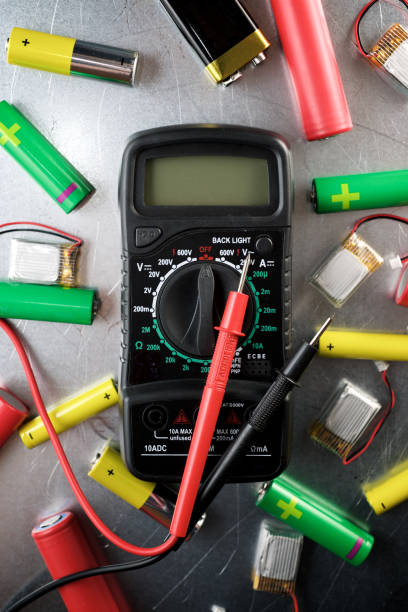
A digital multimeter (DMM) is the most versatile tool in any electronics lab. it measures voltage, current, resistance, and continuity.
Recommended tool : Digital Multimeter on Amazon(Affiliate Link)
Why it’s essential :
- Helps diagnose wiring and circuit issues
- Tests batteries, resistors and sensors
- Ideal for both beginners and pros
Learn how to use it step-by-step – How to use a multimeter
3. Breadboard – for quick circuit Testing

When you’re prototyping or testing circuits, a breadboard is your best friend. it allows you to build circuits without soldering.
Recommended tool : breadboard kit with jumper wire (Affiliate link)
Benefits :
- Reusable for multiple projects
- No soldering required
- Great for Arduino and ESP32 testing
Read our beginner-friendly article – What is Breadboard and How to use it?
4. Wire stripper and cutter – for clean connections
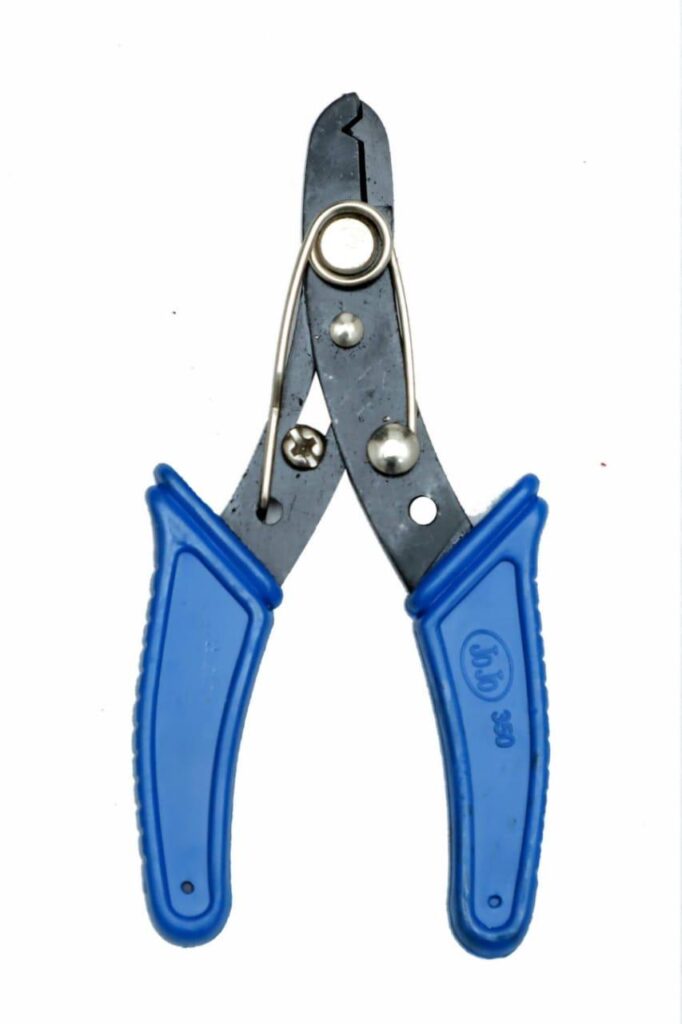
messy wires can rain your setup. A wire stripper and cutter helps you remove insulation neatly and cut wires to precise lengths.
Recommended tool : Automatic wire stripper cutter (Affiliate link)
Pro Tips
- choose one with adjustable sizes
- keep it rust-free for longer life
5. Helping Hands with Magnifier
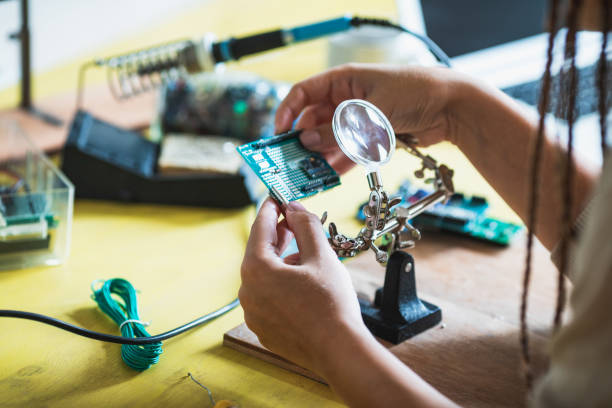
When soldering small components, a helping hand tool with alligator clips and a magnifier lens keep your parts steady.
Recommended tool : Helping Hands soldering station (Affiliate link)
Benefits :
- stabilizes your work
- Reduces hand fatigue
- Increases precision
6. Soldering fume Extractor
Safety is important. A fume extractor removes toxic soldering smoke from your workspace.
Recommended Tool: Solder Smoke Absorber (Affiliate Link)
Why You Need It:
- Keeps air clean
- Prevents headaches from solder fumes
- Compact and USB-powered options available
7. Jumper Wires & Connectors
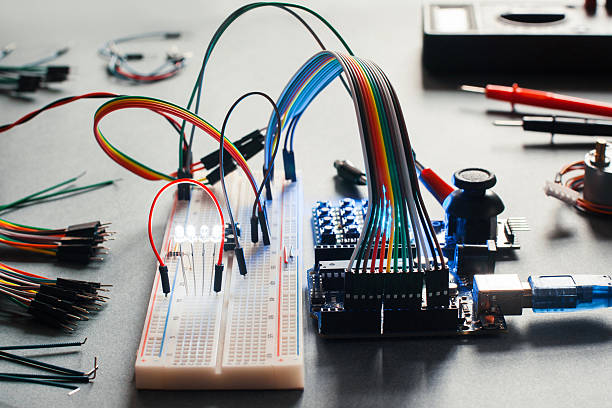
Every breadboard project needs jumper wires to connect sensors, microcontrollers, and modules.
Recommended Tool: Jumper Wire Kit (Male to Female, 120pcs (Affiliate Link)
Tip: Buy assorted types (male-male, female-female) for flexibility.
Explore our project list – Top ESP32 Projects for Beginners.
8. Power Supply or Battery Pack
For portable projects, a reliable power supply is a must. You can use a DC power adapter or rechargeable battery pack.
Recommended Tool: Adjustable DC Power Supply(Affiliate Link)
Bonus Tip: Always double-check voltage and polarity before connecting.
9. Storage Box and Anti-Static Mat
Organization is key for efficient DIY work. Use a component storage box to keep resistors, ICs, and sensors in order. Add an anti-static mat to protect your electronics from ESD damage.
Recommended Tool: Electronics Component Organizer Box(Affiliate Link)
10. Optional Advanced Tools
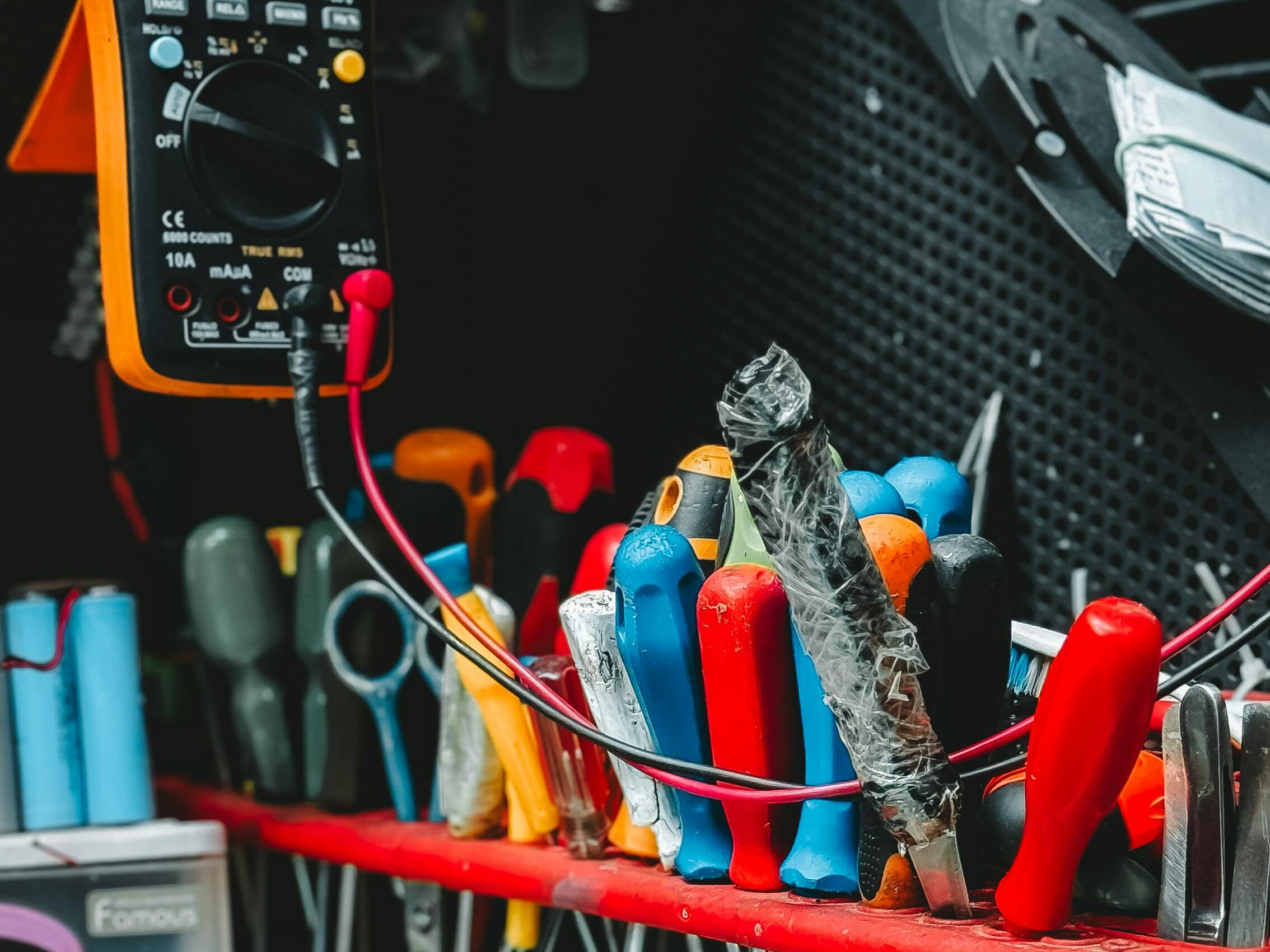
If you’re serious about electronics, consider adding:
- Oscilloscope – for waveform analysis
- Hot Air Rework Station – for SMD soldering
- PCB Holder Clamp – for hands-free assembly
Advanced Electronics Tools on Amazon (Affiliate Link)
Final Thoughts
Building DIY electronics projects is both educational and rewarding — and with the right tools, you’ll work faster, safer, and more efficiently.
Start with essentials like a soldering kit, multimeter, and breadboard, then expand your toolbox as your skills grow.
Start Building Today: Check out the full range of DIY Electronics Tools on Amazon.