
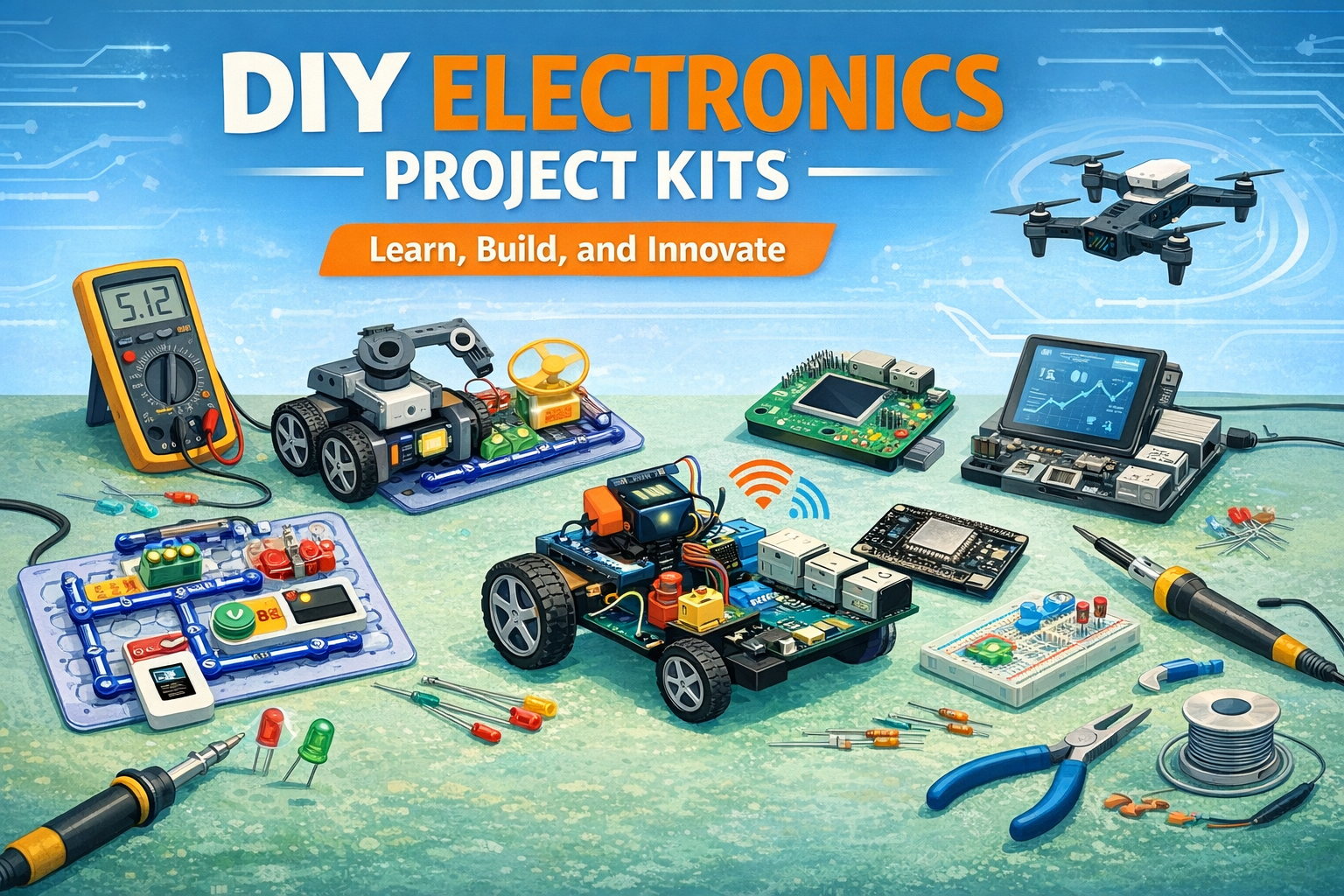
Why DIY Electronics Project Kits Are a Game Changer
Have you ever disassembled a device just to check how it actually worked? What if you could create that device on your own? This is the wonder of DIY electronics project kits — they change curiosity into real skills through practical learning. No matter if you are a hobbyist, a student, a teacher, or a parent, these kits will help you creatively, increase your problem-solving skills and make difficult concepts enjoyable and accessible at the same time. We will demonstrate everything you need to start and put forward reasons why these kits are conquering the maker world in this guide.
DIY Electronics Project Kits: The Big Picture
DIY electronics project kits are much more than just toys; rather, they are very powerful learning devices. They provide the basis of understanding for various subjects such as Electricity and Electronics, Microcontrollers, Robotics, and even the Internet of Things (IoT). As per the market research, the compound K-12 STEM kit segment (which consists of electronics kits) is a quickly rising area, with the market worth approximately $64.11 billion and expected to grow steadily till 2033 as the demand for STEM education increases across the globe.
The growth indicates that parents, schools, and makerspaces are the main buyers who want to connect theory and practical application. These kits are not only enjoyable but also skill developers.
Benefits :
Kits provide practical that enhance memory retention and understanding of abstract concepts, which is often more effective then traditional textbook learning.
Beginners can safely learn about core electronics components like resistors, capacitor, LEDs, Diodes and transistors and how they work.
Following instructions, many kits allow for modifications and open-ended experimentation.
Reputable Kits operate on low voltages ( typically 3v – 9v ) and often use solderless breadboards, minimizing risk and making there own projects.
DIY kits typically include all necessary components and detailed guides in one package, eliminating the need to source individual parts and keeping cost manageable.
What Are DIY Electronics Project Kits?
The DIY electronics project kits are the packages that hold the components and the instructions you need to put together one or more electronic projects — everything from a blinking LED to a programmable robot.
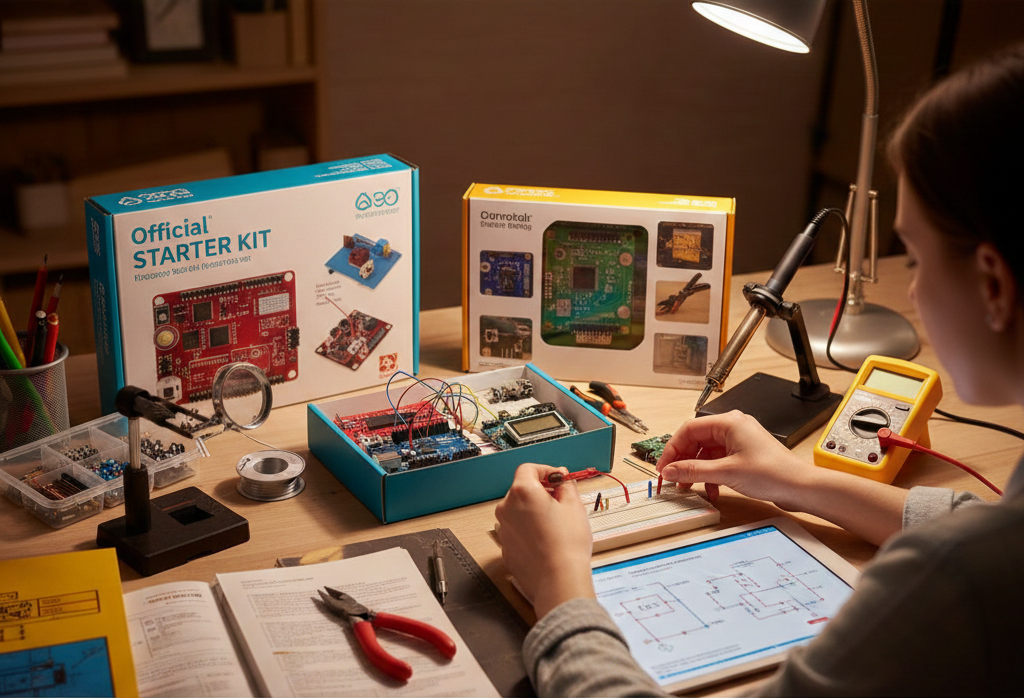
They usually comprise:
- Microcontrollers such as Arduino or Raspberry Pi
- Printed circuit boards, sensors, resistors, and light-emitting diodes (LEDs)
- Small motor modules, displays, and chargers
- Detailed instructions and project ideas for beginners up to experts with makers
Consider it as a way to get familiar with electronics — you can begin with simple projects and later progress to powerful and complex systems.
Types of DIY Electronics Project Kits
Electronics kits helps you to know about how things work. They comes many types and each kit has a special purpose. Some people want to build Robots, Drones and other like to build buzzer alarms, led blinkers. Here are some different types of electronics kits you can know him today :
1. Basic Electronic Kits
- Includes resistors, capacitors, LEDs, switches
- Best for absolute beginners
- Example projects: LED blinkers, buzzer alarms
2. Arduino & Microcontroller Kits
- Perfect for coding + hardware integration
- Comes with Arduino boards, jumper wires, sensors
- Example projects: Smart lighting, temperature sensor
3. Robotics Kits
- Motor drivers, wheels, sensors included
- Great for school/college projects
- Example projects: Line follower robot, obstacle-avoiding robot
4. STEM Learning Kits
- Specially designed for kids & students
- Fun and safe experiments
- Example projects: Solar car, electronic puzzles
Best DIY Electronics Kits to Buy in 2025
Here are some top-rated kits:
1. Arduino starter kit

- Includes Arduino Uno board, sensors, jumper wires, LEDs
- Great for coding + electronics
- 👉 Check Price on Amazon
2. Elegoo Electronics fun kit

- Wide range of resistors, capacitors, ICs
- Perfect for experimenting with circuits
- 👉 View on Amazon
3. Robotics DIY kit for beginners

- Includes motors, wheels, IR sensors
- Build your own line-following robot
- 👉 Buy Now
4. Snap circuits STEM kit

- Safe & easy for kids (snap-based system)
- No soldering required
- 👉 Check Latest Price
How to choose the right kit
When buying a DIY Electronics kit, consider :
- Skill level – Beginners vs. advanced hobbyists
- Components included – More sensors & parts = more projects
- Support/tutorials – Good kits provide manuals or YouTube tutorials
- Budget – Kits range from ₹500 to ₹5000 depending on complexity
A Real Example That Inspires
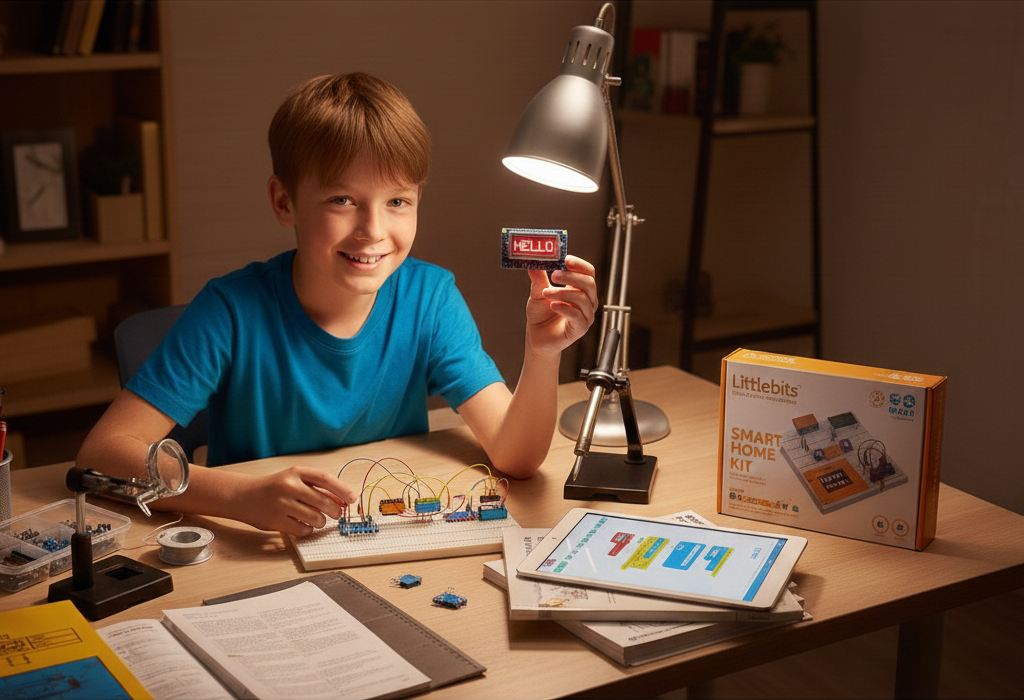
LittleBits, one of the most reputable brands in modular electronics, has brought technology to schools in every corner of the country. Wikipedia states that their modular kits are present in over 2,000 schools around the world, which is clear evidence of the widespread acceptance of tactile learning in electronics.
Tips for Beginners
- Start with simple LED or buzzer projects
- Watch YouTube tutorials for guidance
- Join DIY communities & forums for support
- Experiment and don’t be afraid to make mistakes
Conclusion
DIY electronics project kits are not only hobbies but also powerful educational tools that connect theory with practical creation. These kits facilitate the entire spectrum of the maker’s journey — from beginners who just want to satisfy their curiosity to experts developing intricate automation projects. They offer the opportunity to think like an engineer, create with boldness and learn through doing.
DIY electronics project kits are the most effective method to learn electronics practically. Such kits cover a wide range of areas from Arduino to robotics and are thus the source of unlimited creative and innovative ideas. If it is your first time, get a basic kit, and then later on, move on to an Arduino or robotics kit.
Each person has a different learning method. Some prefer to observe, while others like to work with their hands. A lot of DIY kits incorporate these different approaches by using images, providing step-by-step instructions, and using real projects to facilitate learning for all.
👉 Ready to start? Check out the best DIY electronics kits here:
- Your “How to Use a Multimeter” blog
- “Best Soldering Kit for Beginners” post
- “DIY Solar Kit” post